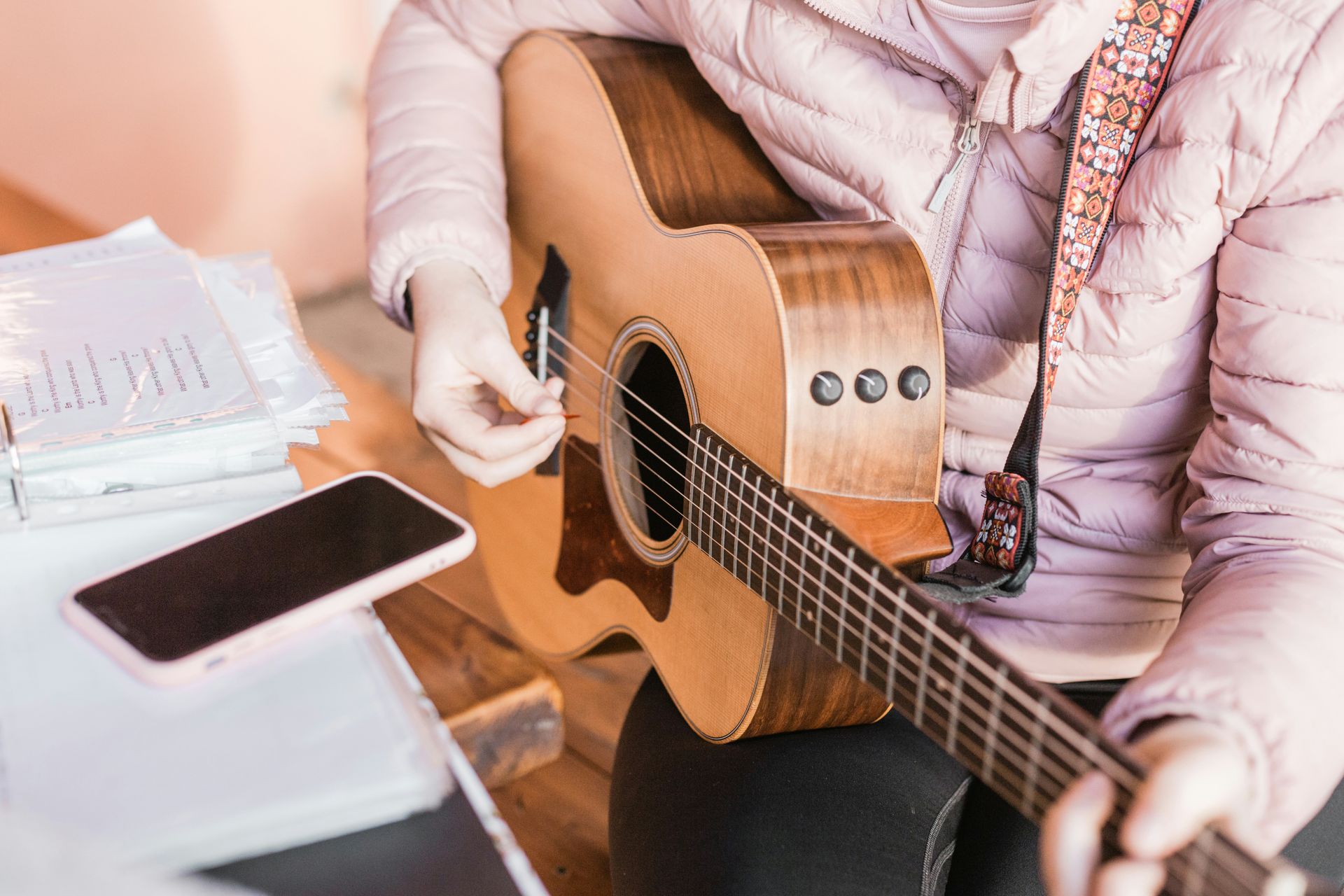
When my daughter Gracie first started using Pip, she was thirteen and she had her own smartphone. We don’t have strict screen time limits, but she keeps an eye on hers and likes to keep it down. She certainly didn’t want to waste it testing her dad’s app.
So she opened her practice plan, read the first activity her cello teacher Jane had set, and turned off the screen. When she was ready to move on, she turned the screen back on, read the next activity, turned it off again, and carried on practising. Over about 15 minutes, she worked through several different activities, looking at Pip only briefly between them. She focused brilliantly and even practised her scales, which she hadn’t touched for months. I was quietly listening in another room and was delighted.
But Pip credited her with less than a minute of practice.
I realised immediately that the way Pip logs students’ time needed to improve. The app is there to motivate students to build a healthy practice habit, and few things are a bigger motivation killer than not getting credit for the work you’ve put in.
So we prioritised building a more sophisticated time-logging system that didn’t require the screen to remain on throughout the session. It proved harder than I expected and meant putting more visible features on hold. It’s also some of the work I’m most proud of.
That small episode captures something important about the way we’re building Pip. Right from the start, we’ve said we want children’s hands to be on their instrument and their eyes to be on their music—not on our app. And we mean it.
How we’re building Pip
These are the five principles we want our decisions to reflect:
Music gets the attention | Children should spend most of their time with their hands on their instrument and their eyes on their music—not on Pip. |
Encouragement without addiction | Pip makes the next step clear, then gets out of the way. It makes real effort visible—without an endless feed, flashy distractions or a barrage of rewards. |
Responsibility, not surveillance | Pip should help children take increasing ownership of their practice, not demand constant proof that they are doing it. |
Connection without social media | Teachers, students and parents can stay in the loop, and children can feel part of a wider community, without comments, followers, public profiles or direct messages. |
Privacy by design | We collect only what we need, treat children’s data with particular care and never sell personal information or fund Pip through advertising. |
Those are the principles. Read on for why they matter and how they shape the choices we’re making as we continue to develop Pip.
Why use technology at all?
There is a lot to be said for a paper practice notebook. It is simple, familiar and wonderfully unlikely to compete for a child’s attention.
But paper has its limitations. A notebook can be lost, left at school or buried at the bottom of a bag. A teacher’s notes, handwritten in a hurry, aren’t always easy to decipher. Parents may have little idea what the teacher has asked their child to do, while teachers have limited visibility of what happens between lessons.
Technology can help.
A practice plan in Pip is legible, up to date and available instantly on any device. Teachers, students and parents can share the same understanding of what to work on. Children can see their effort and consistency adding up. Recordings, videos and other useful resources can sit alongside the teacher’s instructions in the app.
And once a week, the Sunday Squeak gives children the feeling that they are practising as part of something bigger—even though they may usually practise alone.
I’m a parent and I worry about screen time and my children’s digital diets as much as anyone. But I don’t think the answer is to reject everything technology can offer. The challenge is to use technology without allowing it to take over the activity it’s meant to support.
The app is not the activity
Pip is a music practice app. But using Pip is not practising music.
Practising happens when a child picks up an instrument, listens closely, repeats a difficult passage, experiments with a sound or begins to make sense of something that felt impossible last week.
Pip’s job is to help them know what to do, encourage them to begin and make their effort visible. Then it should be happy to get out of the way.
That principle affects seemingly small product decisions. Time away from the screen must still count. Children shouldn’t have to keep tapping buttons to prove they are engaged. Pip shouldn’t interrupt their playing with a constant stream of sounds, animations, vibrations and congratulatory messages.
We want children to experience the satisfaction of making real progress—not become dependent on an app manufacturing a reward for every action.
Responsibility, not surveillance
Good music practice gradually becomes something a child can take ownership of.
That doesn’t mean leaving them to manage everything alone. Teachers provide expertise and direction. Parents provide encouragement, structure and practical support. Pip can help all three stay in step.
But Pip should not become a digital supervisor.
We don’t need to watch, listen to or verify every moment of a practice session. If a child reads their plan, puts the screen down and continues without looking at it, that isn’t a flaw in the engagement model. It’s a sign that it’s working. And Pip will still log the practice time.
Could a child simply leave Pip open and collect Pips without actually playing? Of course they could. Pip uses sensible limits, but we don’t pretend technology can—or should—verify every note. The rewards are deliberately small, and the practice record is there to help children develop honest awareness of their own effort—not to serve as proof for adults.
Trust and responsibility matter. Part of learning to practise is learning to be honest about your own effort, notice what needs attention and keep going when nobody is checking.
Technology should help children develop that independence, not make it unnecessary.
Connection without social media
Pip brings teachers, students and parents together, but it is not a social network.
There is no endless feed. No public profile. No direct messaging between children. No comments, likes or popularity contests.
Our weekly Sunday Squeak videos are designed to create a gentle sense of community: a reminder that other children are also picking up instruments, finding things difficult and trying again. They are shared through unlisted, Made for Kids YouTube videos, with comments disabled.
We want children to feel part of something without fear of a thoughtless comment spoiling their experience, or creating another feed designed to keep them scrolling.
Privacy deserves particular care
Any product used by children has a responsibility to treat their information carefully.
That means collecting only the data Pip genuinely needs, being clear about how it is used and building privacy into the product rather than treating it as an afterthought.
Pip has no advertising, and we will never sell personal data. Our business depends on creating something useful enough that families choose to pay for it—not on finding increasingly effective ways to capture and monetise children’s attention.
We aren’t trying to build an app that children spend as much time using as possible.
We’re trying to build one that helps them spend more time making music—and makes that time a little clearer, calmer and more purposeful.