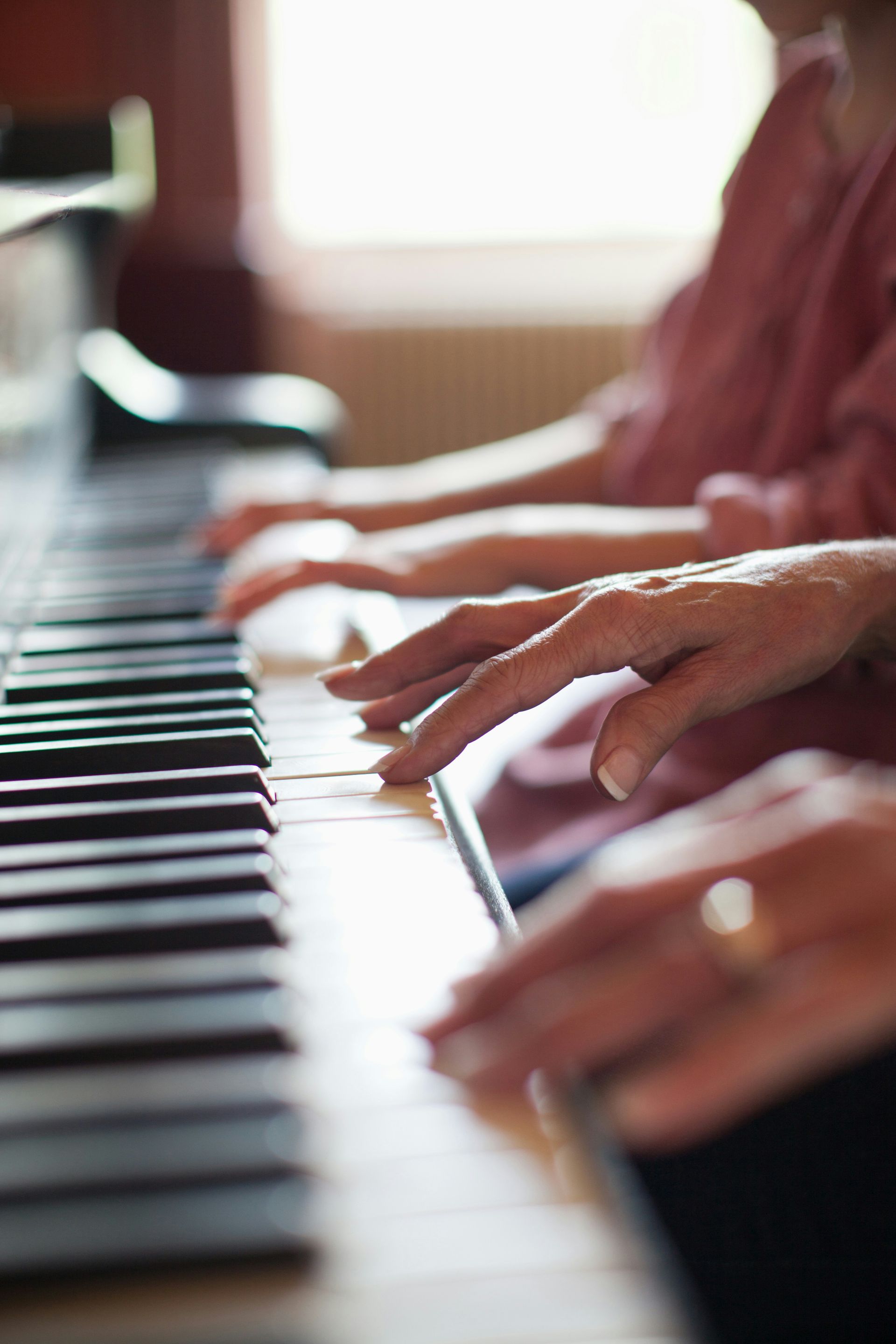
Very few parents sign their child up for music lessons because they expect them to become a professional musician.
Of course, some children will go on to study at a conservatoire, play in elite orchestras or make a career from music. But most won't. They'll become teachers, nurses, engineers, designers, builders, chefs, carers, scientists, entrepreneurs…and perhaps parents themselves. If someone had asked us, on the day of that very first lesson, whether we thought our child would one day earn a living from music, most of us would probably have smiled and said, "I very much doubt it."
So why do we do it?
Deep down, it's because we aren't really investing in music lessons at all. We're investing in the kind of people our children might become.
We hope they'll discover that difficult things become easier if you keep turning up. That mistakes aren't something to avoid, they're simply part of learning. That progress is often so gradual you only notice it when you look back. And that few things are more satisfying than finally being able to do something that once felt impossible.
Music just happens to be one of the best places to learn those lessons.
The musical skill still matters. Learning to play an instrument gives a child something real: a way to express themselves, participate with other people and find pleasure in something they can continue doing for decades. But the process of acquiring that skill gives them something else as well.
Children learn scales, rhythms and technique—and, almost without noticing, they also strengthen their brains while developing patience, concentration, resilience and self-belief.
Every practice session teaches them something about music. At the same time, every practice session teaches them something about themselves.
That's one of the reasons practice has become so important to me. Not only because each practice session helps create a better musician, but because it gives a child another opportunity to discover, “I can do hard things. Maybe not today, but if I keep turning up, I’ll make progress.”
The best teachers understand this instinctively. They aren't simply teaching notes and rhythms; they're helping children become curious, resilient and expressive people. Parents have a different role, but it's every bit as important.
Teachers guide the learning; parents create the environment between the lessons.
A home where music is simply something the family does, where mistakes are expected, effort is noticed, progress is celebrated and everyone supports one another, gives children the opportunity to develop both their musical ability and their belief in what they can do.
We often focus too much on the things that are easiest to measure. Grades, certificates and exam results all have their place, but they’re only snapshots. They tell us how a child played on one particular day, not whether music has become part of who they are.
So instead of imagining your child at Grade 8, imagine them at twenty-eight. Or sixty-eight.
They're making dinner, humming a tune they learnt years ago. There's a piano in the corner of the room. They sit down and play for ten minutes, not because there's an exam coming up or because anybody asked them to, but simply because it makes them feel good.
To me, that's success.
Not that they learnt to play.
But that they wanted to keep playing.